


Bringing Bio-Inspired Riblet Surfaces to Complex Industrial Components within BILASURF
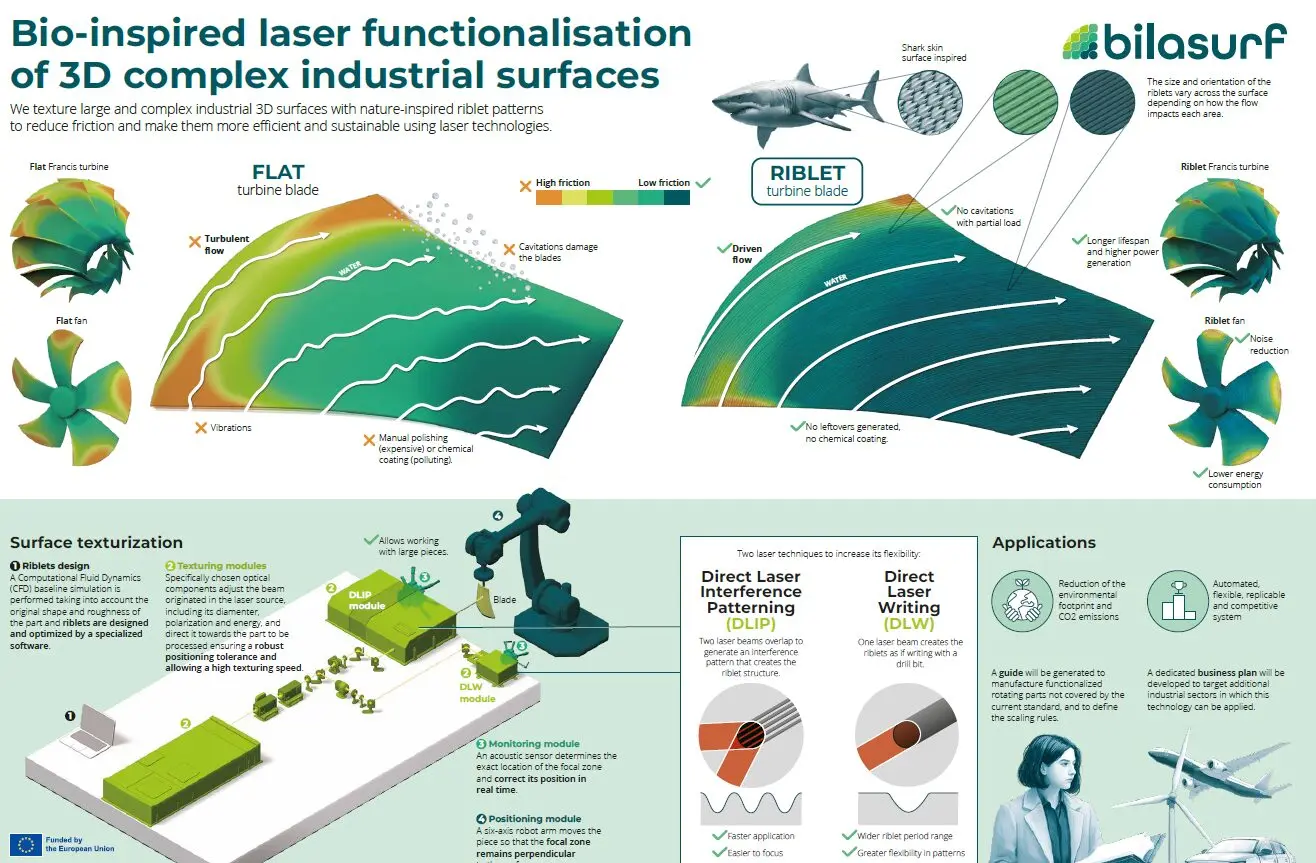
After more than three years of research and development, the EU-funded BILASURF (Bio-inspired laser functionalization of complex 3D industrial surfaces) project has been successfully completed.
The project addressed a central challenge in industrial surface engineering: how can drag-reducing Riblet structures be designed, manufactured and validated on large, curved and rotating components rather than only on simple laboratory samples? BILASURF combined application-specific Riblet design, advanced CFD simulation, high-rate laser processing, multi-axis component handling and inline quality monitoring within one integrated manufacturing approach.
From shar skin to industrial efficiency
BILASURF addressed this challenge by combining:
- CFD-based flow analysis and Riblet design
- Laser processing of complex surfaces
- Automated positioning and manufacturing
- Process monitoring and quality control
- Validation on industrial demonstrators
The role of bionic surface technologies
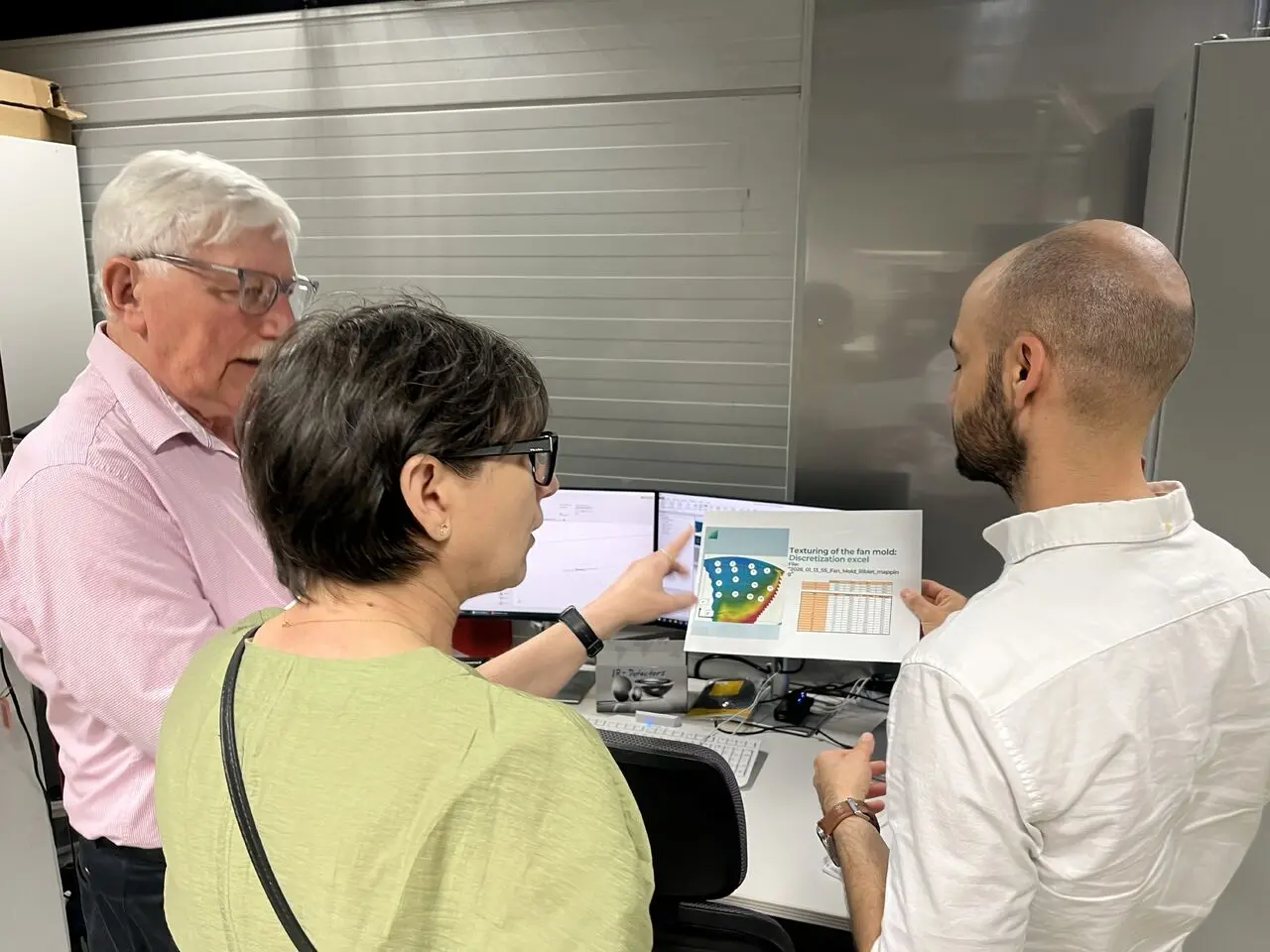
At bionic surface technologies GmbH, our central responsibility was the application-specific design and simulation of the Riblet surfaces. Using advanced CFD simulations, we analyzed the local flow conditions, wall-shear stresses and flow directions across the turbine and fan geometries. Based on these results, suitable Riblet dimensions, orientations and application areas were defined for the different components. This targeted the realization of an optimized application strategy to reach the most effective solution with locally adjusted structure geometries while maintaining manufacturability and scalability. BST therefore provided the link between:
industrial application → CFD analysis → Riblet design → manufacturing requirements → performance validation
From components to demonstrators
The developed technologies were evaluated using two industrial demonstrators:
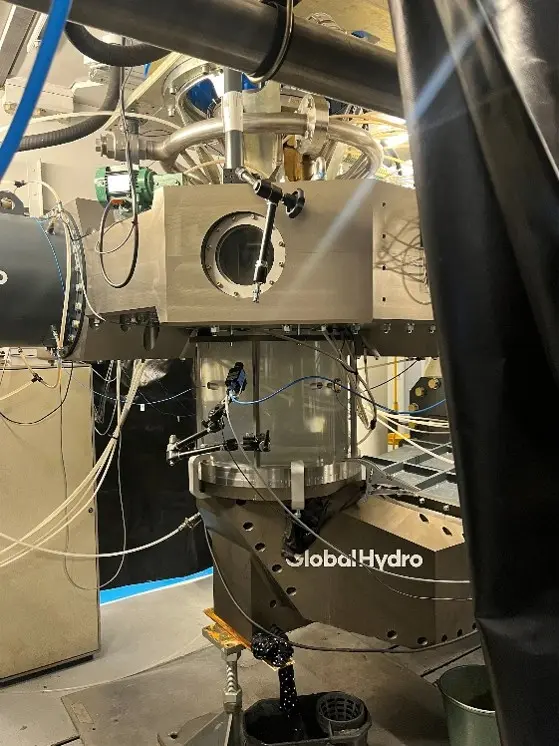
Hydropower turbine: Testing was first conducted on simplified hydraulic profiles and subsequently on a reduced-scale model of a Francis turbine supplied by Global Hydro. Comparative tests with and without laser-structured Riblets investigated their influence on turbine efficiency, flow behavior and cavitation under realistic operating conditions.
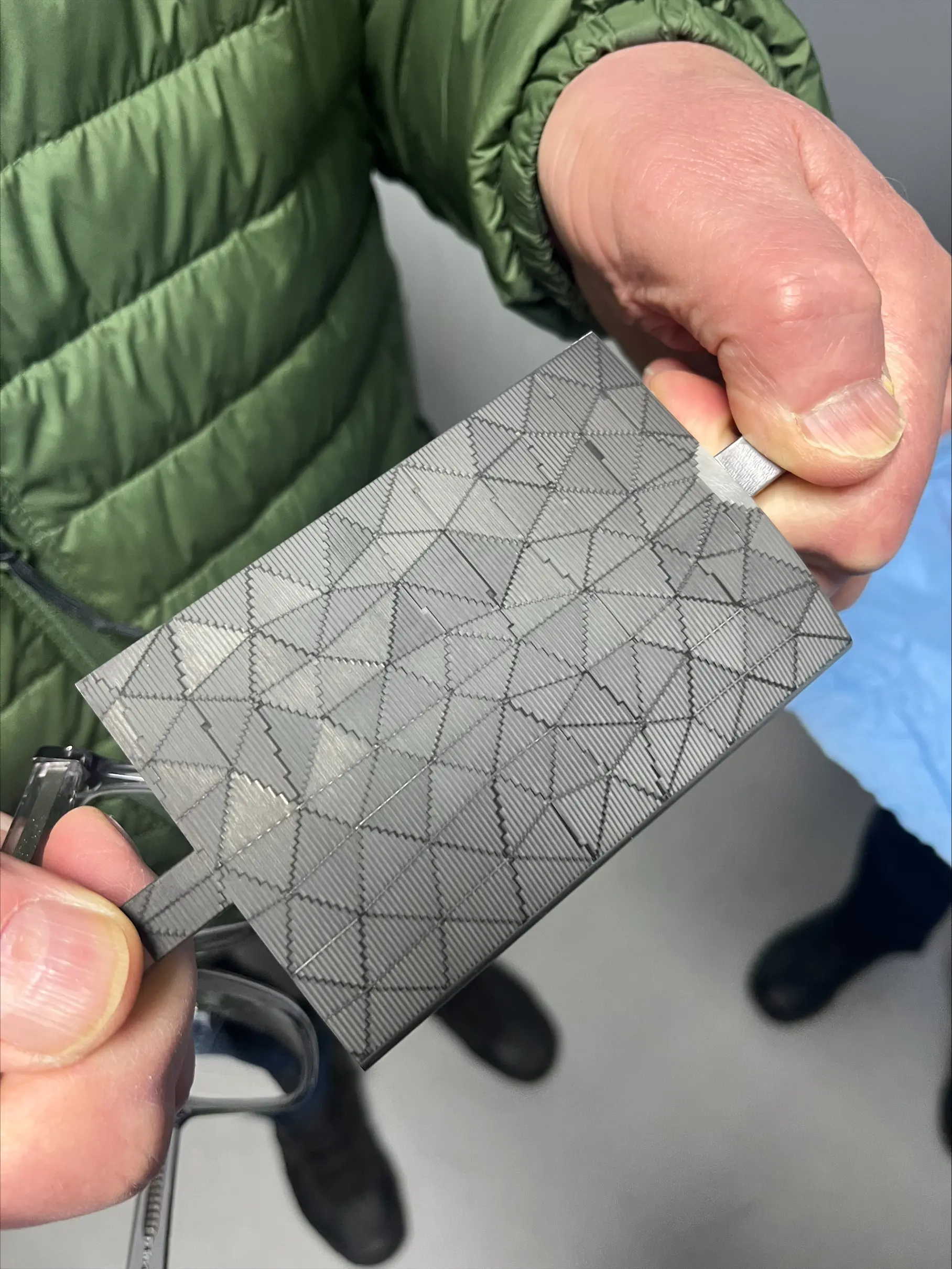
Industrial fan: For the fan demonstrator, Riblet structures were adapted to the strongly varying flow conditions across the blades and transferred through a replication-based manufacturing route. Preliminary flow-channel measurements on injection-molded Riblet plates demonstrated a reduction of more than 3% at higher flow velocities compared with the corresponding flat reference surfaces.
Together, the demonstrators showed how simulation, surface design, manufacturing and testing can be combined to move Riblet technology from simplified samples towards complex industrial components.
Moving towards industrial application
With the successful completion of BILASURF, an integrated technology platform for the functionalization of complex 3D surfaces has been established and demonstrated. The next steps concern the further industrialization of the developed technologies:
- Application-specific pilot projects
- Further improvement of processing speed and scalability
- Long-term durability and operational validation
- Integration into industrial production processes
- Qualification for additional components and sectors
Project Information
Program: Horizon Europe – Made in Europe Partnership
Duration: January 2023 – May 2026
Project budget: Approximately €5.6 million
Grant agreement: 101091623
Coordinator: Ceit Research Center
Project partners: Ceit Research Center, AIMEN Centro Tecnológico, Fraunhofer IWU, Fusion Bionic GmbH, bionic surface technologies GmbH, SuperGrid Institute, Global Hydro Energy, ZIEHL-ABEGG, Workshop of Photonics and secpho.